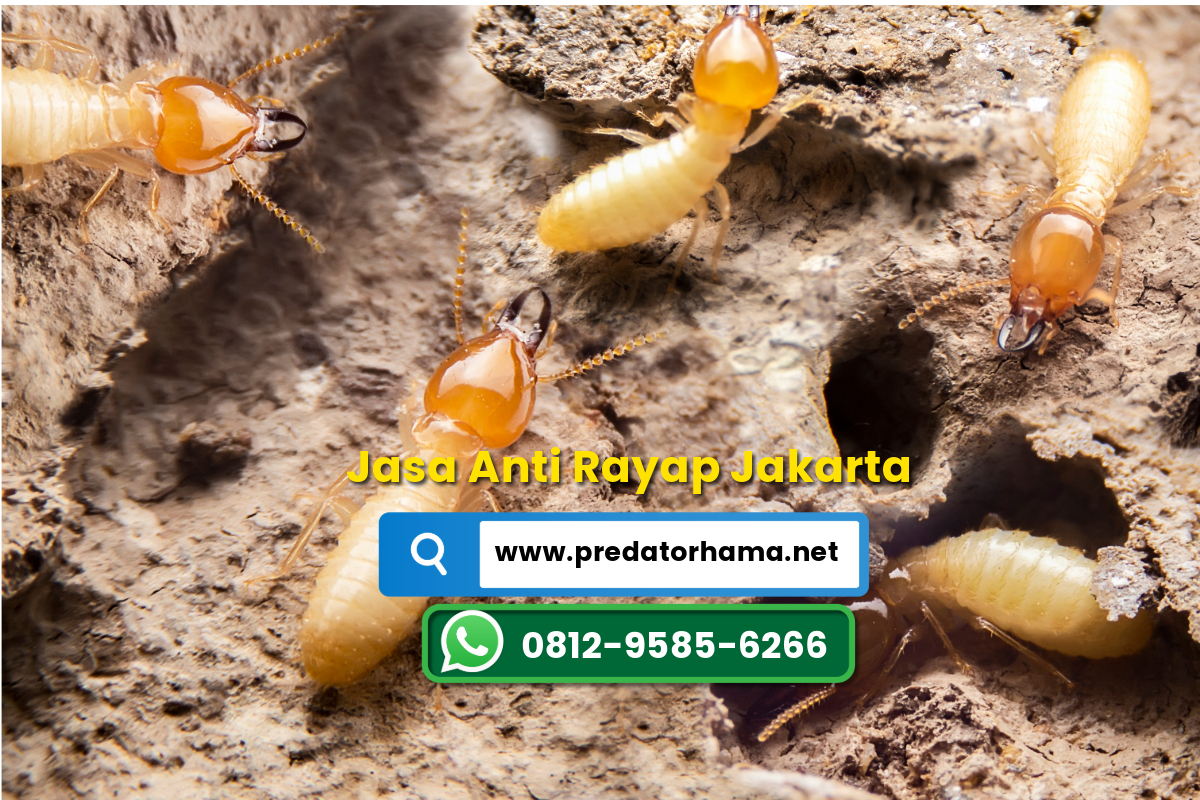
The expression "islandwide exclusion" sounds like a massive infrastructure, but it's actually a forensic technique that is derived from biogeography. Each structure is an ecological island importance surrounded on all sides by compacted dirt pavement, utility trenches and. The same methods employed to determine which termites populated Krakatau later on after 1883 determine whether or not Coptotermes could cross a five-meter concrete driveway to access a Menteng villa. Exclusion does NOT mean poisoning each Jakarta termite. It is about engineering conditions that make crossing impossible.
1. Sterilization is always more effective than poisoning
Quarantine is the sole method which has proven effective in eliminating the entire island. For Jakarta homes, this refers to the treatment of infested timber removed during renovation. Infested wood that is cut and sent to landfills does not harm the colony. The process allows colonization rafts in the waste stream. Professional exterminators are required to burn and heat the infested waste on site.
2. Soil Chemistry may result in exclusion zones
In some Indonesian island, soils that are too acidic or nutrient poor prevent termites from feeding on the soil. Jakarta antitermite services are able to reproduce this situation locally. pH modification beneath slabs and around foundation perimeters--using agricultural sulfur or buffered acid--creates a an environment that termites with fungus growth are unable to tunnel through. The soil does NOT need to be poisonous. It only needs to be unsuitable.
3. Connectivity is the lifeline for the colony
Subterranean termites do not invade as distinct organisms. They are one superorganism, which spreads throughout foraging tunnels. Severing landscape connectivity--removing wooden fences that contact soil, replacing organic mulch with river stone, eliminating brush piles and timber debris--fragments the colony into isolated pockets that eventually starve. Island-wide exclusion should begin at the boundary of the property and not at the foundation wall.
4. Macrotermitinae Doesn't cross Pavement
The termites that grow fungus (Macrotermes Microtermes Odontotermes) require soil in order to maintain a symbiotic bond with the fungus. The fungus-growing flies cannot construct satellite nests on isolated planter box or elevated planters. A continuous vapor barrier beneath the entire building excludes the entire feeder community permanently.
5. Tanjung Priok Port Jakarta's Achilles Heel
When the infested wood arrives from outside of the quarantine area, the island-wide exclusion ceases to apply. Tanjung Priok is the principal entry point for Coptotermes gestroi, Nasutitermes, and other wood colonies. The anti-termite service must not only inspect the structure, but also each wooden item brought onto the property following treatment.
6. A Variety of Wood Species Is an Exclusion Infrastructure
Jakarta's wood supply is controlled predominantly by Acacia mngium, Paraserrianthes falcataria (rubberwood) as well as Hevea brasiliensis. They are all non-durable and extremely palatable to subterranean termites. The use of these species in door frames, window jambs or structural repairs is similar to putting bait stations in disguise as architecture. The inclusion of prohibited-species into renovation contracts is required for exclusion.
7. Moisture gradients on Foraging highways cannot be avoided
Termites create mud tubes but not for the sake of the process, but rather because their cuticles dehydrate at a level below seventy percent relative humidity. Every evaporative feature, whether it's a leaking air conditioner, poorly graded beds or a dripping garden hose, creates a moisture profile that acts as an attractive feature. If moisture audits during pre-emptive checks are not done, the exclusion process fails.
8. Above-Ground colonies signal a Perimeter Breach
Coptotermesgestroi colonizes islands by constructing nests within the wall cavities or roofs. This colony will survive indefinitely, without needing to touch the ground. If an exterminator comes across nests on the ground, they need to consider it to be a totally infested island, which requires complete enclosure fumigation and whole-structure heating.
9. Baiting Is Surveillance, Not Exclusion
The bait stations along the perimeter do not work in the absence of termites. They can remove colonies from the station's foraging area. In the worst-case scenario they function as supplementary feeding stations that keep colonies alive during dry seasons. Physical barriers like stainless-steel mesh, graded sand, stones, or membranes coated with polymer are necessary to attain true exclusion. They can be installed either during construction, or afterward, by excavating all around.
10. The 1.6 Million House Precedent
Dutch colonial rulers rebuilt or restored 1.6 million Javanese houses between 1911 and 1941, in an unprecedented exclusionary program which targeted the plague-ridden, bamboo construction. While they were successful in fighting the disease but they were not successful in the cultural front. Bamboo construction was prohibited and traditional housing destroyed, as well as vernacular knowledge. Jakarta anti-termite firms must be aware that erasure happens when exclusion is made without consent. Homeowners must be aware of their exclusion strategy and adhere to the rules.
You can also read our conclusion.
Chemical application programs are not sufficient to eliminate termites from an entire island. It's accomplished through control of the habitat and physical barriers, material quarantine installations, and deliberate engineering of soil chemistry that is inhospitable. Krakatau demonstrated that complete sterilization and strict quarantine could thwart a volcano at a 100-year scale. Jakarta's antitermite services might not be able replicate the volcanic eradication of Indonesia however they have the ability to implement the other lessons that island biogeography provides. Termites cross waters over floating timber. Termites can cross paving on the edges of concrete. They traverse the property line with organic mulch. Exclusion is the discipline of removing every vessel that is available. Read the recommended jasa basmi rayap for blog recommendations including jasa pengendalian hama, harga anti rayap, pintu anti rayap, jasa anti rayap tangerang, perusahaan pest control, pembasmi rayap kayu, jasa pembasmi hama, jasa anti rayap, jasa pengendalian hama, cara membasmi rayap di lemari and more.

Alternatives To Fumigation For Termites In Indonesian Villas In Jakarta
Indonesian villa homeowners have been trained to think tent fumigation can be the only option when termites subterranean invade wall areas or embedding timbers. This notion is propagated by companies that offer fumigation services and defended by homeowner fear. The tent falls. The neighborhood complains. Families leave for 3 days. The colony inside the walls is killed. The colony which was in the garden and was not affected by the gas, rebuilt the foraging tunnels and then moved into the building after 18 months. Fumigation sterilizes building but doesn't alter the landscape reservoir. The Jakarta anti-termite companies that serve the villa industry provide an alternative that is not for charity but to gain an advantage in the market. Tenting is not an alternative for people who have eight bedrooms located in Pondok Indah. They would like to eliminate the colony without the glitz, the evacuation, and the certainty of reinfestation.
1. Fumigation Kills Termites Inside; Baiting Eliminates the Colony
Tent fumigants deliver lethal gas concentrations to each void space in the building's envelope. Each termite that enters the structure is killed. The colony beneath the driveway, beneath the garden, and under neighbouring properties do not end up dying. The colony dies after the poison is delivered to the nucleus through trophallaxis. The colony dies. The structure becomes reinfestation-resistant because the source population is eliminated. The choice of fumigation is seldom made by homeowners twice who know the distinction.
2. Heating Treatment penetrates where Gas is Not able to
The wood is heated to a temperature of 50°C for a full hour. This process kills all stages of life including eggs and doesn't require tenting. Indonesian villas with exposed beam construction, elaborate carvings, and heritage timber are candidates for heating treatment. The equipment is there. The contractors are there. The problem is not that the technology isn't there, but rather that homeowners are unaware of their choices.
3. Electro-Gun Technology - Localized Infections
High-frequency microwave devices emit radiation which stimulates water molecules in wood, creating dangerous heat within specific infestation zones without affecting surrounding materials. If a homeowner discovers termites active within the door frame roof truss, roof truss, or any another wood structure the electro-gun will remove the pest without needing to evacuate their house. Jakarta exterminators have no intention of importing commercial technology. This isn't an experiment.
4. Wood Injection Systems Preserve Architectural Fabric
Liquid borate solutions injected under pressure into drill holes move through the timber via capillary action, making the entire component toxic to termites for a long time. The holes for drilling were smaller than the holes of existing nails. The carving is unaltered. The door frame remains in good condition. Indonesian villa owners often refuse this method, since exterminators only propose it following the proposal of replacement. When offered before replacement is accepted.
5. Baiting from Above for Cavity Colonies
Tent fumigation was the default method used by Coptotermesgestroi to establish an aerial carton nest within the walls or in roof spaces. Above-ground bait stations, locked to active mud tubes that rise from ceiling corners or baseboards are able to deliver toxicants directly to the nest population. The colony consumes its own workers as they return to the tube. There is no tent. No evacuation. No evacuation.
6. Nitrogen Freezing for Small-Scale Heritage Components
The termites are quickly frozen when liquid nitrogen is circulated within sealed chambers around the wood. This is followed by the thaw cycle, and then repeated. This is a cryogenic baiting process and not chemical manipulation. If you have a small population of ants on antique or museum-quality Javanese carvings, nitrogen freezing will preserve the patina. The injection and heat treatment can darken this patina.
7. Physical Barrier Retrofits Help Prevent Reinfestation
The home that is constantly smoulders without ever putting up physical barriers is renting temporary sterilization. Retrofitting polymer or stainless steel mesh via the perimeter excavation will prevent subterranean insects from returning to the structure once colony elimination is complete. Fumigation solutions are more compelling when they're paired up with permanent barriers to exclude. Sell the combination: Remove the colony that is active by baiting, and then install the barrier.
8. Carbon Dioxide Purging for Enclosed Spaces
Carbon dioxide when compressed and inserted into sealed crawl spaces or attic spaces is able to displace oxygen in the way that termites residing in these spaces are eliminated. The tenting of the building is required only for partial protection. CO2 dissipates fast and does not leave any trace and poses very little risk for occupants who follow the guidelines for re-entry. Indonesian villas with termite activity restricted to the roof structures are over-served by full-building fumigation.
9. The timeline of Baiting must be made public upstream
Fumigation eliminates termites after 72 hours. Baiting kills colonies in 6 to 8 weeks. The speed of tenting is too quick for owners of villas who are familiar with it. The timeline, if disclosed before contract execution is considered a bargain to avoid the need for evacuation. Jakarta anti-termite companies that cover up the baiting timeframe after the proposal has been delivered create their own problems with close rates.
10. The Reservoir Colony must be Identified.
At least one colony per villa must be located in the vicinity of the green area, a cemetery or an undeveloped land. Fumigation doesn't take into account this colony. Injection, heat treatment or baiting will not take into account this colony only if it is deployed in a specific way over the entire perimeter of the structure. Comprehensive fumigation alternatives include landscape baiting grids aimed at the colony outside that could in the event of a recurrence, the villa will be infested eighteen months. The exterminator that treats the structure but does not treat the reservoir will only provide temporary relief.
Conclusion
Indonesian homeowners don't wish to move out of their homes. They don't like tenting equipment on their beautifully manicured lawns. They don't want their neighbors to inquire whether the property has been infested. What they want is the dead colony and guarantee that it won't return. Fumigation accomplishes the first goal reliably and the second objective not at all. When used as integrated protocols, instead of competing options, such as heating treatment, microwave technology for wood nitrogen-freezing, CO2 removal or retrofits to physical barriers and retrofits with physical barriers, these methods achieve both objectives. Jakarta antitermite services will be able to capture the premium villa market that is currently controlled by tenting contractors by establishing themselves as fumigation providers alternatives. This includes carrying multiple techniques for elimination, as well as training technicians and logging outcomes. The investment in equipment is substantial. The training investment is continuing. There is a demand in the market. Demand is already present. It is important to be aware of which exterminators using alternative protocols will be included in the search results and those that will go with tents. Follow the recommended anti rayap for more advice including kitchen set anti rayap, jasa rayap, jasa basmi hama, rayap lemari, bahan lemari anti rayap, kayu tahan rayap, cara membasmi rayap kayu, pengendalian hama, bahan lemari anti rayap, jasa pengendalian hama and more.